Monday, June 7, 2010
HW#25: Final Project
Click on the link ILAS Final Project. Choose one topic from the list and write an article for the class newsletter. The rest of the topics will be on the final on Wednesday.

HW #24: Documentaries
Click on the "ILAS Documentaries" link. Respond to the questions for 3 documentaries on the site.
Wednesday, June 2, 2010
HW#23: Response to "Motorcycle Diaries"

Tuesday, June 1, 2010
Key Concepts
1. Post-Independence
--leaders of the oligarchy
2. Populism
--Perons (Argentina), Vargas (Brazil)
--the masses/majority are "leading"
3. US Intervention and Cold War
--Conflicts between Nationalization vs. Privatization
4. Rhetoric-how leaders use language to achieve their goals
--leaders of the oligarchy
2. Populism
--Perons (Argentina), Vargas (Brazil)
--the masses/majority are "leading"
3. US Intervention and Cold War
--Conflicts between Nationalization vs. Privatization
4. Rhetoric-how leaders use language to achieve their goals
HW#22 - Ch. 10 Chasteen "Reaction"
Ch.
1. How was Cuba a threat to Latin America and the United States? Explain.2. Who is Peron? (google)
3. What are death squads in Argentina and who did they target?
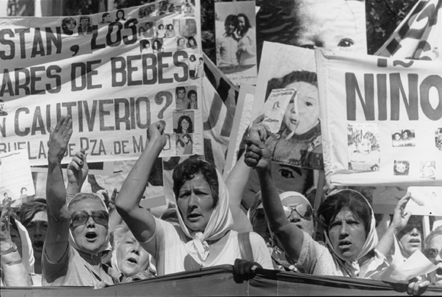
4. Describe “Las Madres de la Plaza de Mayo”?
5. Who are the Tupamaros in Uruguay?
6. Why was Chile so unique and different? Explain.
7. How was Che’s vision of revolution differing from Allende (Chile)?
8. How did the CIA get involved in Chile’s politics?
9. What were the conflicting views on Latin American government between Jimmy Carter and Ronald Reagan?
10. What actions are considered “non-capitalist”?
11. What does Chasteen mean by “Red Mexico”?
12. Why did Argentina go to war with Great Britain?
13. Why was the US so interested in Central America?
14. Under military rule, what social groups become targets by the government?
15. Who is Rigoberta Menchu and how did she affect the lives of Guatemalans?
16. Why Costa Rica was spared by US involvement?
17. Why did the US support the “Anti-Sandino” movement?
18. In what ways did Cuba help Nicaragua?
19. How did the Sandinistas (Nicaragua) fall?
20. What are Contras?
21. Why was Bishop Romeo killed/assassinated?
22. What tactic did US trained military used to bring down rebellion in El Salvador?
23. Explain why the Salvadorian army was stronger than the rebels?
24. Why did innocent lives in El Mozote die?
25. What is your opinion on how Chasteen describes Latin America and US relations? Is it well researched why or why not?
Terms:
“national security doctrine”
Alliance for Progress
U.S. School of the Americas
Gabriel García Márquez
Las Madres de la Plaza de Mayo
Tupamaros
Salvador Allende
Augusto Pinochet
Tlatelolco massacre
“dirty war”
Somoza family
Sandinista National Liberation Front (FSLN)
Contras
Daniel Ortega
Violeta Chamorro
“fourteen families”
Oscar Romero
Farabundo Martí National Liberation Front (FMLN)
La Violencia
Pablo Escobar and the Medillín Cartel
M-19
Friday, May 28, 2010
HW#21 - Chasteen Ch. 9 "Revolution"

Discuss your answer for the following questions throughout your reading. Be prepared to post answers and respond to your peers and teachers on each question.
1. Why would Brasília represent the “perfect symbol of the post-Vargas moment in Brazil ” and the PRI the perfect symbol for Mexico
2. Chapter 8 talked about the popularity of Roosevelt ’s Good Neighbor Policy. Why did relations between the U.S.
3. Why did the U.S. tolerate the National Revolutionary Movement (MNR) in Bolivia while it actively supported a proxy force to oust Arbenz in Guatemala
4. Based on this textbook, would you say the Cuban revolution was more an expression of Marxism or of nationalism? Why?
5. What were the goals of liberation theology?
6. Which event in Chasteen's Ch. 9 remind you of symbol in Nuestra America
Terms:
Raúl Prebish
Declaration of Caracas
Juan José Arévalo
Jacobo Arbenz
Pablo Naruda
Jorge Luis Borges
Che Guevara
Fulgencio Batista
Granma
Tuesday, May 18, 2010
History Symposium Group Work
Form groups of four people. Each group member will be assigned a "pillar" of Latin American independence: 1-Francisco Miranda, 2- Simon Bolivar, 3-Jose de San Martin and 4-Bernardo O'Higgins. For each leader, research and present on the following questions:

•What can we (as students, as a country, as leaders) learn from these men?
•What are some of their leadership qualities?
•What were their military strategies?
•What were their political views and actions?
•What were their connections with each other?
•How can we measure their success?
•How do each of them impact Latin American politics today? (Current Events – use any media to make this connection i.e: Biographies, video clips, book excerpts, articles)

Subscribe to:
Comments (Atom)


